

You’re driving along, everything feels normal, then your headlights start looking dim and the battery light pops on. Your heart sinks because you think, “Not again!” Most of the time it’s not the battery, it’s the alternator quietly giving up. The great news? You can check it yourself in about ten minutes with a multimeter. No mechanic visit, no expensive scanner, just you and a cheap tool. Let’s walk through it together like we’re standing in your driveway chatting.
Park safely and pop the hood, set your multimeter to 20 volts DC, touch the red probe to the positive battery post and black to the negative, write down the number with the engine off, start the car and check again while it’s idling, give it some gas to about 2000 RPM and see if the voltage sits nicely between 13.8 and 14.6 volts, switch on headlights, AC, rear defroster, and anything else that uses power, then look one more time, if the number stays solid above 13.5 volts you’re golden, but if it drops hard or never climbs your alternator is asking for help.
Safety First: Get Set Up the Right Way
Before you do anything, let’s make sure nobody gets hurt. Cars have enough electricity to give you a nasty surprise, so take it slow. Park on flat ground, pull the handbrake, and turn the car completely off. Keep kids and pets out of the way. If you have gloves handy, slip them on—they’re nice for keeping battery acid off your hands.
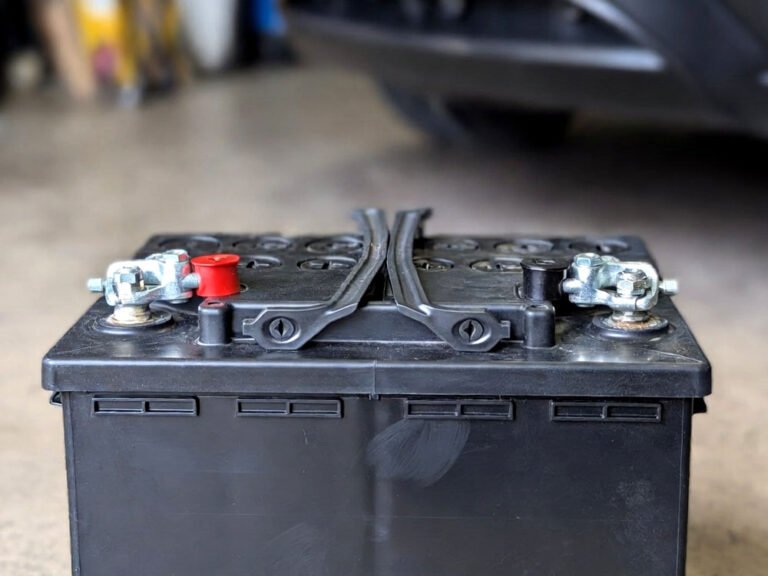
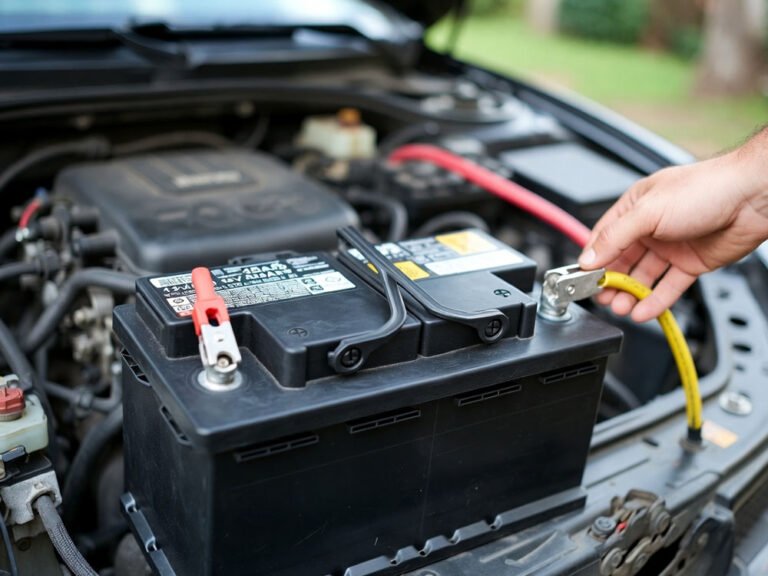
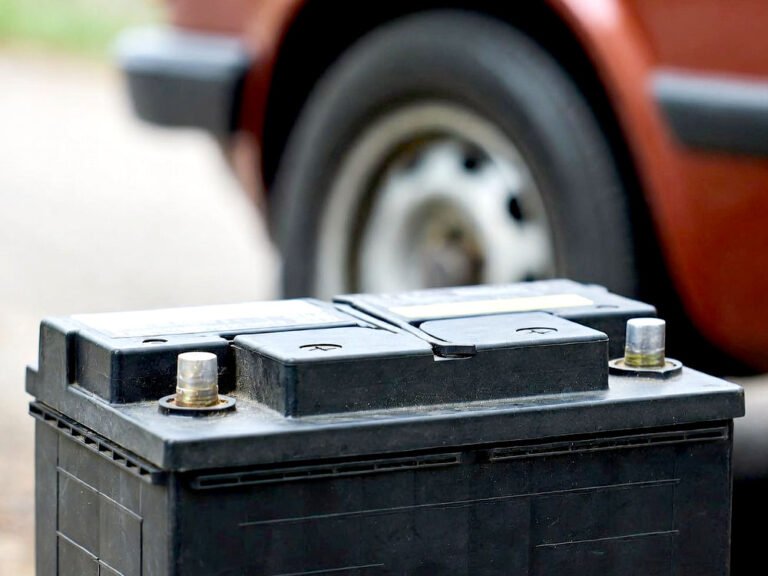
Pop the hood and take a quick look around. Find the battery (big rectangular box with two posts) and spot the alternator (usually down low with a belt wrapped around a pulley). Wipe any obvious dirt off the battery posts with a rag if you can. Dirty posts mess up your readings and make the test pointless. If they’re really crusty with white or green junk, you can clean them later, but do the voltage check first while things are still connected.
Hold the multimeter probes carefully so they never touch each other. A quick short can fry the meter or spark near the battery. Set the dial to DC volts (look for the V with a straight and dotted line) and pick 20V if it isn’t automatic. Take your time. When everything feels right, you’re ready to start measuring.
A bright flashlight helps a ton, especially if you’re working in the evening. Good light means you see loose wires or a cracked belt right away. Small details like that can save you a lot of guessing later.
- Park flat and set the brake.
- Wear gloves if you have them.
- Clean battery posts if they’re dirty.
- Keep probes from touching.
- Use good light so you can see clearly.
Tools You Actually Need
Good news—you don’t need a garage full of fancy stuff. The star of the show is a digital multimeter. You can grab one for under twenty bucks and it’ll last years. Any basic digital one that reads DC voltage works perfectly. Fancy auto-ranging ones are even easier because they pick the right scale themselves.
Grab some old clothes or an apron if you’re worried about grease. Battery terminals can be messy. A phone flashlight works great if your garage light is weak. That’s honestly it for must-haves.
If you have a friend around, ask them to sit in the driver’s seat to rev the engine while you hold the probes. Makes life way easier. No friend? A small block of wood or a helper stick under the gas pedal can hold the RPM steady. Optional, but nice.
You won’t need any special alternator tool or pull anything apart. The multimeter reads everything through the battery. Keep your tools in one spot so nothing rolls under the car. Simple setup = quick test.
- Digital multimeter (DC volts).
- Gloves or old shirt.
- Phone flashlight.
- Optional helper or throttle prop.
- Rag for wiping posts.
Checking Battery Voltage Engine Off
Let’s start super simple. Turn the multimeter to DC volts and set it to 20V (or let it auto-range). Touch the red probe to the positive battery post (the one with + or red cover) and the black probe to the negative post (– or black cover). Hold them steady.
A healthy, charged battery shows between 12.4 and 12.7 volts. Write that number down. If you see 12.2 or lower the battery is weak and needs a charge before you keep going. A tired battery tricks you into thinking the alternator is bad.
If it’s way down like 11 volts or less, the battery probably has a dead cell or got left on overnight. Charge it fully or jump it and retest. You want a solid starting number so the alternator test makes sense.
Take a second to enjoy that first reading. You’re already doing real mechanic work with almost no effort.
- Set meter to DC 20V.
- Red to +, black to –.
- Good battery reads 12.4–12.7 V.
- Charge it if too low.
- Get a strong base reading first.
Testing While the Engine Idles
Okay, fire the engine up and let it settle into a normal idle. No need to touch the gas yet. Put the probes back on the battery posts the exact same way—red positive, black negative.
Now watch the number. A working alternator bumps the voltage up to 13.8–14.6 volts pretty quickly. That little jump means it’s sending power to charge the battery and run everything. If it stays around 12.6–12.8 volts the alternator isn’t doing its job.
Sometimes the reading bounces around a bunch. That usually means loose wires, worn brushes inside the alternator, or a belt that’s slipping. Listen close—any squealing or chirping from the belt area is a big clue.
Don’t panic if the number looks low. Lots of easy fixes exist. You’ve already learned something important just from this idle check.
- Start engine, let it idle.
- Probes on battery again.
- Look for 13.8–14.6 volts.
- Bouncy reading = loose stuff.
- Squealing belt? Check tension.
Rev It Up and See What Happens
Now let’s give the alternator some real work. Have your helper (or your stick) gently press the gas until the engine hits about 2000 RPM. Hold it steady there for a few seconds.
The voltage should stay nice and steady in that 13.8–14.6 volt sweet spot. It might creep up just a hair, but it shouldn’t rocket way higher. Steady voltage at higher RPM proves the alternator can keep up when you’re driving normally.
If it shoots past 15 volts and keeps climbing, the voltage regulator inside is shot and it’s overcharging. That will boil your battery dry pretty fast. Time to plan a replacement.
Still sitting low even at 2000 RPM? The alternator can’t make enough power. Could be bad diodes, worn bearings, or something else. Either way, you’ve got solid proof something’s wrong.
- Rev to roughly 2000 RPM.
- Voltage holds 13.8–14.6 V.
- Over 15 V = regulator problem.
- Still low = weak alternator.
- Steady = doing great.
Load Test: Turn Everything On
Real driving means lights, AC, radio, wipers—all at once sometimes. Let’s copy that. Flip headlights to high beam, crank the AC to max cold, turn on rear defroster, heater fan high, radio loud. Keep the engine at 2000 RPM.
Voltage might dip for a second when you turn everything on, but it should bounce right back and hold above 13.5 volts. A strong alternator barely notices the extra load.
If it falls below 13 volts and stays there, the alternator is struggling hard. It can’t keep the battery charged when you actually need power. That’s when you start getting stranded.
Watch the headlights too. If they get brighter when you rev but dim when everything’s on, the charging system is weak. Those little clues tell you a lot.
- Turn on headlights, AC, defroster, fan, radio.
- Keep 2000 RPM.
- Should stay above 13.5 V.
- Big drop = can’t handle load.
- Dim lights under load = warning sign.
Final Thoughts
You just did a full alternator health check without spending a dime at the shop. Catching a weak alternator early saves you from dead batteries, tow trucks, and surprise breakdowns. Do this test every couple of months or whenever something feels off. It’s quick, costs nothing extra, and gives you real peace of mind. Keep that multimeter in the glove box—you’re officially the family car detective now. Drive safe and enjoy the confidence that comes with knowing your charging system is solid.
| What You’re Doing | Good Voltage Reading | What It Tells You | Quick Tip |
|---|---|---|---|
| Engine off | 12.4 – 12.7 V | Battery is charged and ready | Charge if under 12.2 V |
| Engine idling | 13.8 – 14.6 V | Alternator is charging normally | Listen for belt squeal |
| Revved to 2000 RPM | 13.8 – 14.6 V steady | Handles higher speed fine | Over 15 V means bad regulator |
| Everything turned on (load) | Above 13.5 V | Can manage real driving demands | Big drop = alternator trouble |
| Voltage bouncing a lot | Unstable | Loose connection or worn parts | Tighten wires and recheck |
| Headlights dim at idle/load | Drops noticeably | Charging system is weak | Next step: shop check |
| Constantly over 15 V | Too high | Overcharging – bad regulator | Replace soon to save battery |
| Always below 13 V | Very low | Alternator probably failed | Get it diagnosed quickly |
Frequently Asked Questions (FAQs)
Is it safe to test the alternator myself?
Yes, it’s very safe if you take basic precautions. Park on flat ground, set the brake, keep probes from touching each other, and work with the engine off at first. Wear gloves to avoid battery acid. Thousands of people do this test every week without any trouble. Just stay focused and go slow the first time. You’ll feel like a pro after one try.
Can a bad alternator drain the battery when the car is parked?
Usually no. A normal alternator stops charging completely when the engine is off. But if the diodes inside are bad, a tiny leak can slowly drain the battery over days or weeks. If your battery dies while the car sits, check for other things first like interior lights or a glove-box light staying on. The alternator itself is rarely the overnight killer.
Do I need to take the alternator out to test it?
Nope, not at all. This whole test happens with everything still connected under the hood. You read the voltage right at the battery. Only if you want a super deep test would a shop pull it out and bench-test it. Save that step for later if these numbers look bad.
Is 14.2 volts good when the engine is running?
Yes, 14.2 volts is perfect. Most cars like to sit between 13.8 and 14.6 volts when running. A steady 14.2 means everything is happy and charging well. Don’t worry about tiny changes—temperature and load make small differences normal. Big swings are what you watch for.
Can a loose belt cause low voltage?
Absolutely. The belt spins the alternator. If it’s loose or slipping, the alternator turns too slowly and can’t make enough power. You’ll often hear a squeal, especially when it’s wet outside or you turn on the AC. Tighten or replace the belt, then retest. Super common fix that costs almost nothing.
Do I really have to rev the engine during the test?
You should. The idle check tells part of the story, but revving to 2000 RPM shows if the alternator can keep up when you’re actually driving. Steady voltage at higher RPM gives you confidence the system works in real life. Skip it only if you’re in a huge hurry—but you’ll get the full picture if you do it.
Is 12.8 volts bad with the engine running?
Yes, that’s too low. The alternator should always push higher than the battery’s resting voltage. Anything under 13.5 volts means it’s not charging properly. Your battery will slowly go flat while you drive. Double-check connections and belt tension first, then get ready to replace the alternator if it stays low.
Does cold weather change the test results?
Cold makes the battery a bit weaker, so the starting voltage might look lower. Let the engine warm up a couple minutes before you test. The numbers usually improve once everything is warm. If you can, test on a milder day for the clearest reading. Extreme cold sometimes needs a stronger alternator to keep up.