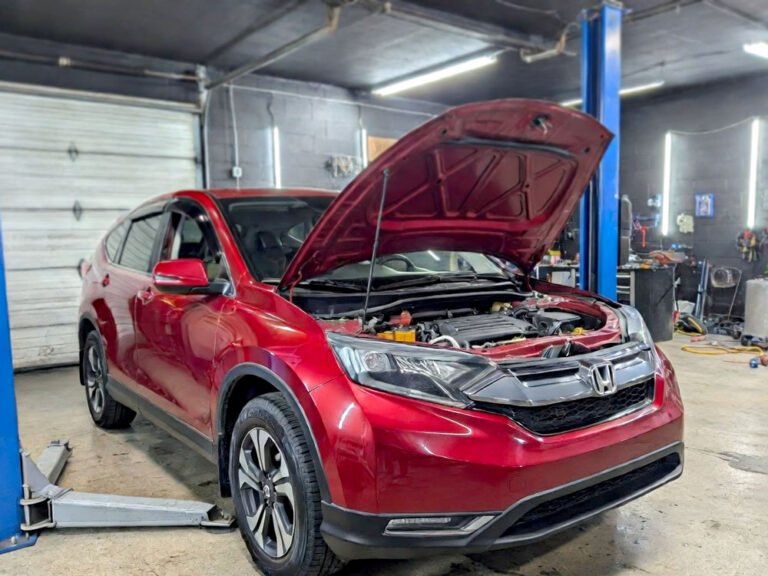


Once you to smell that weird, dusty gym bag odor in your car, you know something is wrong. Many drivers just ignore it or spray perfume, but the real problem is a clogged filter hiding in your dash. This article teaches you how to change cabin air filter in Honda fit models so you can breathe fresh air again without paying a mechanic.
You will start by opening your glove box and emptying everything out because you need to reach the back panel. Then you must squeeze the sides of the glove box inward to let it drop down and reveal the hidden filter housing. Next, unclip the plastic cover, pull out the old dirty filter, and slide in a fresh one with the airflow arrows pointing down. Lastly, snap the cover back on and lift the glove box into place to finish the job in under five minutes.

Why Do You Need to Change Your Air Filter Often?
Your car is like a big vacuum cleaner that sucks up everything from the road. It pulls in dust, pollen, and even tiny bits of tire rubber while you drive. The cabin filter stops all that junk from getting into your lungs. If you don’t swap it out, your heater and air conditioner have to work twice as hard to push air through the gunk.
A dirty filter also makes your windows fog up much faster on rainy days. This happens because the airflow is too weak to clear the moisture off the glass. You might notice a whistling sound or a weak breeze coming from your vents when the paper is full of dirt. Replacing it is the cheapest way to make your car feel brand new and smell great.
I always tell people to check their filter after the spring pollen season ends. If you live on a dirt road, you might need to do it even more often. It only takes a second to look at it, so don’t wait for a bad smell to start. Keeping it clean saves your blower motor from burning out early, which is a very expensive repair.
- Better air quality for your family.
- Stronger blast from your AC vents.
- No more funky or musty smells.
- Faster window defrosting in winter.
- Longer life for your AC system.
- More money stays in your pocket.
How to Change Cabin Air Filter in Honda Fit Using This Simple Guide
Open the Glove Box and Clear Everything Out
First, you need to empty your glove box completely because it has to hang all the way down. I’ve seen people try to skip this, and then all their napkins and registration papers end up on the floor. It is much easier to just toss everything on the passenger seat for a moment. Make sure there is nothing heavy left inside that could snap the plastic hinges.
Next, look at the sides of the glove box while it is open. You are looking for the stoppers that keep it from falling onto your feet. On the Honda Fit, the plastic is quite flexible, so you don’t need tools for this part. Just get a good grip on the outer edges and prepare to give them a firm squeeze.
My insider secret is to do this when the car is warm. If it’s freezing cold outside, the plastic gets brittle and might crack if you pull too hard. If you’ve been running the heater for a bit, the plastic will be nice and soft. This makes it much easier to pop the box out of its tracks without any stress.
- Clear out all heavy items first.
- Warm up the cabin if it’s cold.
- Check for any hidden side screws.
- Set your items on the seat.
Squeeze the Sides to Drop the Compartment
Now comes the part that feels like you might break something, but don’t worry. You need to push the left and right sides of the glove box toward the middle. This moves the rubber stoppers past the frame of the dashboard. Once they clear the edge, the whole box will swing down toward the floor mats.
Sometimes these stoppers stick a little bit if they haven’t been moved in years. You can use one hand to push the side and the other to pull the box down gently. Don’t yank it, just apply steady pressure until it gives way. You will see a black plastic rectangle behind the space where the glove box used to be.
Here is a pro tip for you: watch the dampener arm on the right side. Some Fit models have a little plastic rod that controls how slowly the door opens. If yours has one, just unhook it gently with your finger. It usually just clicks off, and it makes the whole process much smoother so nothing dangles or pulls.
- Push inward on both sides firmly.
- Lower the box toward the floor.
- Watch out for the dampener arm.
- Don’t use tools to pry it.
Find and Remove the Filter Cover
Once the glove box is out of the way, the filter tray is staring right at you. It is a long, thin plastic door that usually has clips on the left and right ends. You just need to pinch these clips with your thumb and index finger. The cover should pop right off without any fight at all.
Make sure you look at the cover before you set it down on the floor. It usually has “Air Flow” printed on it with an arrow. This is very important for later, so try to remember which way that arrow was pointing. Usually, the arrow points toward the floor because that is how the air moves through the system.
A little trick I use is to check for leaves sitting on top of the tray. If you see pine needles or leaves, try to pick them out before you pull the filter. If you don’t, they might fall into the blower motor fan when you slide the filter out. That can cause a very annoying clicking sound every time you turn on the fan.
- Locate the two side plastic clips.
- Pinch them together to release.
- Note the direction of the arrow.
- Pick away any loose leaves first.
Slide Out the Old Dirty Filter
Now you can finally see the filter itself sitting inside the tray. Grab the edge of the white paper and pull it straight toward you. If it hasn’t been changed in a long time, it might be heavy with dirt or even have some bugs in it. Pull it out slowly so you don’t spill any of that mess onto your carpet.
Take a good look at the old filter once it is out in the light. If it’s grey, black, or full of fuzzy stuff, you’re doing a great thing for your car. You might even see some mold if you live in a very humid place. Throw that old thing in the trash immediately so you don’t breathe in the dust you just removed.
Here is a sneaky tip: look inside the empty hole with a flashlight. Sometimes mice like to build nests in there because it’s warm and cozy. If you see any fluff or chewed-up paper, you should vacuum it out before putting the new filter in. It’s much easier to clean it now than to take everything apart again later.
- Pull the filter straight toward you.
- Keep it flat to avoid spills.
- Inspect for any signs of mold.
- Check the empty slot for debris.
Install Your Fresh New Filter Properly
Take your brand new filter out of the box and check the sides for an arrow. This is the most important part of the whole job. You must make sure the “Air Flow” arrow on the filter matches the direction of the arrow on the car. In almost every Honda Fit, that arrow must point down toward the floor.
Slide the new filter into the tray just like the old one came out. It should fit snugly without you having to fold or force it. If it feels too big, you might have the wrong part number or you might have it turned the wrong way. A perfect fit means the edges are straight and the pleats are even.
I always write the date and the car’s mileage on the side of the filter with a felt-marker. This way, the next time you peek in there, you know exactly how long it has been. It’s a small habit that makes you look like a total pro. Plus, it helps you stay on a good schedule for your car’s health.
- Match the arrow to the air flow.
- Ensure the arrow points downward.
- Don’t bend the filter frames.
- Write the date on the edge.
Snap the Cover and Glove Box Back
Now you just need to put everything back the way you found it. Take the plastic cover and snap it back onto the filter housing. You should hear a clear “click” on both sides when it is locked in. Give it a tiny tug to make sure it won’t vibrate loose while you are driving down the highway.
Lift the glove box back up and line up the stoppers with the dashboard frame. If you unhooked that dampener arm earlier, click it back into place now. Then, give the glove box a firm push upward. The sides will flex and pop right back into their tracks, and the door should close perfectly.
My final secret is to turn on your AC to full blast right after you finish. Listen for any weird noises and enjoy the smell of clean, fresh air. If it feels like more air is coming out of the vents than before, you did it perfectly. It’s a great feeling to know you did this yourself instead of paying a shop.
- Listen for the snaps on the cover.
- Reconnect the side dampener arm.
- Push the box up until it clicks.
- Test the air vents on high.
How Often Should You Really Swap the Filter?
Most manuals say to do this every 15,000 miles, but that is just a rough guess. If you drive in a city with lots of smog or on dusty backroads, your filter will get dirty much faster. I usually tell my friends to just check it every time they get their oil changed. It only takes a minute to look, and it can save you from a smelly ride.
If you have allergies, you should definitely change it every six months. New filters are great at catching pollen before it hits your nose. You will notice you sneeze a lot less while driving if the paper is fresh. It is one of the cheapest things you can do to make your car feel like a luxury vehicle again.
Lastly, pay attention to the seasons. A long winter can leave the filter damp, which leads to that mildew smell in the spring. Changing it right when the weather gets warm is a smart move. It ensures your AC is ready for the summer heat without any blockage slowing it down.
- Check it every 15,000 miles.
- Change more often in dusty areas.
- Swap every 6 months for allergies.
- Check after every winter season.
- Look for grey or black spots.
- Replace if you smell mold.
Final Thoughts
I hope you feel ready to tackle this task now. Learning how to change cabin air filter in Honda fit is a great first step into doing your own car work. It saves you about fifty dollars in labor costs and keeps your lungs happy too. You don’t need fancy tools or a lot of time to get this done right. Just take your time, watch those arrows, and you will be a pro.
| Tool or Part Needed | Purpose | Difficulty Level |
| New Cabin Filter | Replaces the dirty one | Very Easy |
| Flashlight | To see inside the dash | Optional |
| Small Vacuum | To clean out leaves | Optional |
| Marker | To write the date | Helpful |
| Your Hands | No tools required | Essential |
Frequently Asked Questions (FAQs)
Is it hard to find the filter inside a Honda Fit?
No, it is actually very easy once you know where to look. It sits right behind your glove box on the passenger side. You don’t need any wrenches or screwdrivers to get to it. Most people can reach it in less than two minutes once the glove box is dropped down.
Can I just wash my old filter and put it back?
You should not try to wash a standard paper filter. The water will ruin the special fibers and make it useless. It might even grow mold if it doesn’t dry perfectly. Since new filters are very cheap, it is always better to just buy a fresh one for your car.
Do I need to buy the expensive filters with charcoal?
Charcoal filters are great if you want to block odors like exhaust or smoke. They cost a little bit more but they work very well for city driving. If you just want to stop dust and pollen, a regular paper filter works just fine. Either one will fit in your Honda.
Is it okay if I put the filter in upside down?
It will still block some dirt, but it won’t work as well as it should. The pleats are designed to hold dirt in a specific way based on the wind. If it’s upside down, the filter might get noisy or clog up much faster. Always follow the arrows for the best results.
Can a dirty filter break my air conditioner?
It won’t break it instantly, but it makes the system work much harder. The blower motor has to pull air through a wall of dirt, which makes it get hot. Over time, this can cause the motor to burn out. Replacing a motor is much more expensive than a simple filter.
Do I have to go to a mechanic for this?
Absolutely not! This is one of the easiest jobs you can do on a car. Mechanics often charge a lot for the part and the labor. By doing it yourself, you keep that money and you know the job was done right. It’s a great way to start learning about cars.
Is it normal for leaves to be inside the filter area?
Yes, it happens all the time because the air intake is near the bottom of the windshield. Leaves and small twigs often fall into the vents. Just make sure you pick them out so they don’t fall into the fan. Keeping that area clean helps your car stay quiet.
Can I change the filter while the car is running?
It is much safer to turn the car off before you start. You don’t want the fan spinning while you are reaching near the housing. Also, it’s easier to hear the plastic clips snap when the engine isn’t running. Safety is always the most important thing when working on any vehicle.