

Most people think fresh paint is ready for a buffer the moment it feels dry to the touch. I once saw a guy ruin a custom hood because he was too impatient to wait. Knowing how long after painting a car can you polish it saves your hard work.
You must wait for the solvents to escape the paint layers before you touch the surface with any abrasive tools. Start by checking the paint manufacturer’s technical data sheet for specific drying times. Keep the car in a dust free area with steady airflow to help the gases vent out properly. Test a small, hidden spot with your fingernail to see if the clear coat feels rock hard or slightly soft. Use a high quality compound with a soft foam pad if the paint is ready for leveling. Work in small sections to keep the heat down and prevent the fresh finish from hazing.
When is the Best Time to Start Polishing Your New Paint Job?
Fresh paint goes through a process called outgassing where solvents evaporate from the film. If you seal the surface too early with wax or polish, those gases get trapped and cause tiny bubbles. Most professional shops tell you to wait at least thirty days for a full cure. This timeframe changes based on the type of paint and the weather in your garage.
Air drying takes much longer than a baked finish from a professional spray booth. A booth uses heat to speed up the chemical reaction in the clear coat. Even if the paint was baked, it still needs time to settle and reach its full hardness. Pushing a buffer against soft paint will just move the material around instead of leveling it.
I always suggest waiting about six weeks if you are working in a home garage. This extra time ensures the paint is stable enough to handle the friction and heat of a machine. You want the surface to be brittle enough that the polish can actually shave off the high spots. Soft paint just gets gummy and clogs your expensive polishing pads.
- Wait thirty days for most modern clear coats.
- Extend the wait to sixty days for thick custom builds.
- Check if the paint smells like chemicals or solvent.
- Look for a dull haze that indicates ongoing gassing.
- Keep the car out of direct sunlight during this time.
- Avoid using any soap with wax or silicone additives.
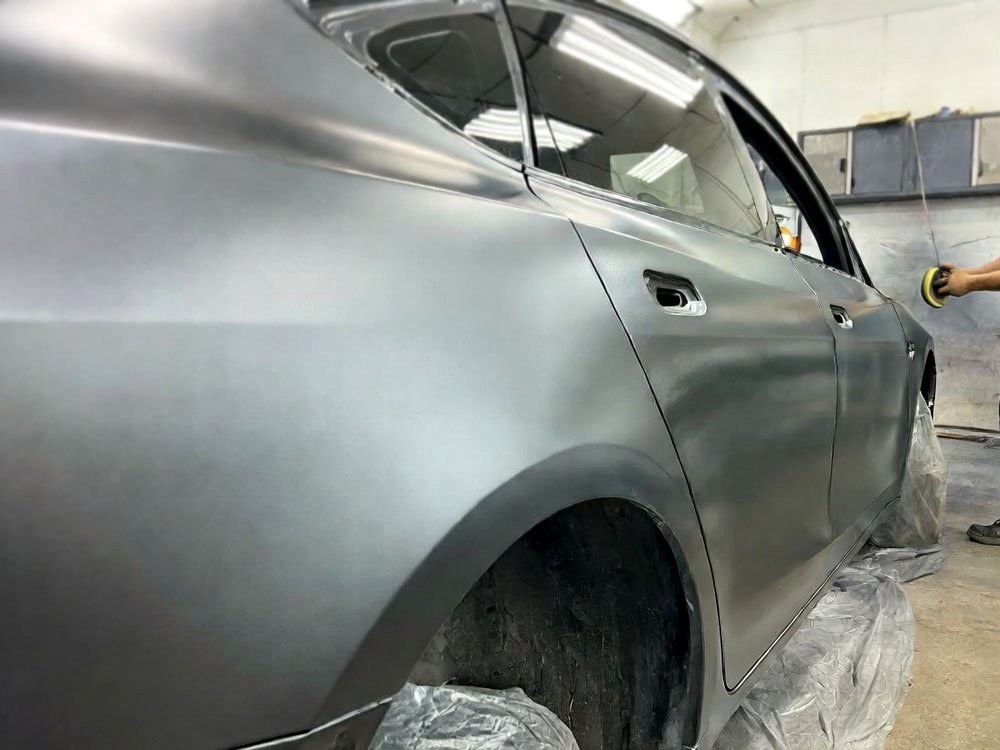
The Expert Guide to Perfecting Your Fresh Paint Finish
Check the Hardness with the Fingernail Test
You don’t need fancy tools to tell if your paint is ready for a buffer. Find a spot that nobody will see like the inside of a door jam or under the trunk lid. Press your fingernail firmly into the clear coat for a second or two. If it leaves a mark or feels like it’s sinking into plastic, you need to wait another week.
Pro painters call this the thumb test because it tells you if the “skin” is just dry or if the whole layer is solid. If the mark disappears quickly, you are getting close to the finish line. If the mark stays there, the paint is still too “live” for any mechanical action. I do this test every few days to track how the curing is moving along.
Don’t rush this part because you can’t undo a deep gouge in soft clear coat. It is better to be bored for a week than to have to respray a whole fender. Patience is the secret ingredient that separates a backyard job from a show car finish. Once your nail leaves no trace, you can grab your tools.
- Test in a hidden area like the lower rocker panels.
- Apply steady pressure without scratching the surface.
- Watch how fast the paint bounces back to shape.
- Repeat the test on different panels of the car.
Clean the Surface to Remove Shop Dust
Before you even think about a polisher, you have to get the car surgically clean. Shop dust is usually made of tiny bits of dried paint and primer that act like sandpaper. If you drag these particles across your new finish, you will create deep scratches. I use a very mild soap that doesn’t have any protective waxes in it.
Rinse the car twice to make sure every bit of grit is gone from the cracks. Use a clean microfiber mitt and very light pressure to lift away the surface film. I like to use filtered water if possible to avoid leaving water spots on the fresh paint. Dry it with a dedicated air blower rather than a towel to minimize physical contact.
Check the surface with a bright LED light to look for any hidden dirt or specs. Even a tiny piece of lint can ruin a polishing pad and cause “pigtail” marks. I always spend more time cleaning than I do actually polishing. A clean workspace is the only way to get that deep, wet look we all want.
- Use a soap labeled as “cleaner” or “stripper” wash.
- Avoid sponges that can trap dirt against the paint.
- Blow out the mirrors and trim pieces with air.
- Wear clean clothes to avoid scratching the panels.
Pick the Right Pads and Compounds
Matching your pad to the hardness of your paint is a bit of an art form. Fresh paint is usually softer than factory paint, so you don’t need the most aggressive stuff. I usually start with a medium foam polishing pad and a fine finishing compound. This combo is usually enough to take out the light haze and minor orange peel.
If you jump straight to a wool pad, you might cut through the clear coat before you realize it. I always tell people to start “least aggressive” and see how the paint reacts. If the scratches aren’t coming out, you can always move up to a heavier grit. It is much easier to add more polish than it is to fix a “burn” through the paint.
Listen to the sound of the machine and watch how the compound breaks down on the surface. You want the liquid to turn translucent as you work it into the panel. I use a high quality brand that is specifically labeled as “body shop safe.” This means it doesn’t have silicones that could mess up the paint’s ability to breathe.
- Select a dual action polisher for safer results.
- Use water based compounds to avoid oily residue.
- Keep several clean pads ready for each body panel.
- Prime your pad with a little bit of detail spray.
Control the Heat While You Work
Heat is the biggest enemy when you are working on paint that is only a few weeks old. Friction from the spinning pad generates a lot of warmth very quickly. If the paint gets too hot, it can actually soften up and peel right off the primer. I keep my hand on the panel frequently to check the temperature of the metal.
If the surface feels hot to the touch, stop immediately and let it cool down. I work in small two foot by two foot squares to keep the heat focused and manageable. Move the polisher at a steady pace and never let it sit in one spot for too long. I also use a lower speed setting on the machine than I would for an old car.
Using a little bit of extra compound can actually act as a lubricant to keep things cool. Don’t be stingy with the product, but don’t drown the pad either. If you see the compound drying out and turning to dust, stop and add a fresh drop. Keeping the surface moist is key to a safe and effective polish.
- Work in a shaded area or a cool garage.
- Avoid polishing during the hottest part of the day.
- Keep the machine moving in a cross hatch pattern.
- Use a light touch with very little downward pressure.
Wipe Away Residue with Fresh Microfiber
Removing the spent polish is just as important as the buffing itself. Use a clean, plush microfiber towel and flip it to a fresh side for every pass. I like to use a 50/50 mix of isopropyl alcohol and water to dissolve the oils. This lets me see the true state of the paint without any fillers hiding the scratches.
Don’t scrub the paint with the towel or you will just put new marks back in. Gently wipe in one direction to lift the residue away from the surface. I inspect my work under a high intensity light after every single section. If I see any remaining haze, I go back over it with a lighter finishing polish.
This step is where you really see the depth of the color start to pop. It’s a great feeling to see your reflection looking back at you like a mirror. If the towel feels like it is dragging, it means there is still some residue left behind. Keep wiping until the surface feels slick and looks perfectly clear.
- Discard towels that fall on the garage floor.
- Use a dedicated light to check for swirl marks.
- Wash your towels with a scent free detergent.
- Store your clean towels in a sealed plastic bin.
Wait Before Applying the Final Wax
Even after you finish polishing, the job isn’t quite done yet. Most people want to throw a heavy coat of wax or ceramic on immediately. You have to resist that urge for at least a few more weeks. The paint still needs to “breathe” to finish the curing process deep down in the layers.
Adding a sealant too soon is like putting a plastic wrap over a wet cake. It stops the moisture from leaving and can cause the paint to stay soft forever. I usually wait a full 90 days from the day of spraying before I apply a ceramic coating. For a simple carnauba wax, you can usually get away with waiting 60 days.
During this waiting period, just keep the car clean with basic washing. If you must have some shine, use a glaze that is specifically made for fresh paint. These are breathable and won’t trap the solvents inside the clear coat. Once the time is up, you can protect your hard work with your favorite wax.
- Read the label on your wax for curing warnings.
- Avoid ceramic coatings for at least three months.
- Use a breathable glaze for a temporary show shine.
- Keep a log of when the car was actually painted.
What Happens if You Polish Your Car Too Soon?
If you jump the gun and polish too early, you risk ruining the entire paint job. The clear coat might look dry, but it is still chemically active and soft underneath. Putting a machine on it can cause the paint to “wrinkle” or tear away from the base coat. I have seen beautiful jobs ruined because the owner wanted it shiny for a weekend show.
Another big issue is “die back,” which is when the paint loses its shine a few days after you polish it. This happens because the solvents are still trying to push through the polished surface. As they escape, they create tiny textures that make the paint look dull again. You end up having to do the entire job over from the beginning.
Lastly, polishing soft paint can lead to deep swirl marks that are very hard to remove. The abrasive grains in the polish can dig too deep into the tender surface. Instead of a mirror finish, you get a hazy mess that looks like it was cleaned with a scouring pad. It is always better to wait and do it right the first time.
- Paint might peel or delaminate from the surface.
- Deep swirls and holograms will be harder to fix.
- Solvents can get trapped and cause paint “solvent pop.”
- The gloss level will drop significantly after a few days.
- The pad might gum up and stop cutting the paint.
- You waste time and money on products that won’t work.
Final Thoughts
Patience is the most important tool in your garage when you’re wondering how long after painting a car can you polish it. If you give the paint the time it needs to breathe and harden, the results will be incredible. Take it slow, keep things clean, and don’t be afraid to wait an extra week. You’ve got this, and your car is going to look amazing.
| Paint Stage | Waiting Time | Recommended Action |
| Freshly Sprayed | 0 to 24 Hours | Do not touch, keep in a dust free room. |
| Outgassing | 1 to 7 Days | Gentle air drying, no washing or wiping. |
| Surface Hardening | 1 to 4 Weeks | Hand wash only with water, no chemicals. |
| Ready for Leveling | 30 to 45 Days | Safe to machine polish with light compound. |
| Fully Cured | 60 to 90 Days | Safe for wax, sealants, or ceramic coatings. |
Frequently Asked Questions (FAQs)
Is it safe to hand polish a car a week after painting?
No, it is generally not a good idea to hand polish that early. Even if you aren’t using a machine, the pressure from your hand can still mar the soft clear coat. You should wait at least thirty days so the paint can harden enough to handle the friction of the cloth.
Can I use a car cover on my fresh paint while waiting to polish?
You should never put a cover on fresh paint for at least two months. The cover can trap solvents against the surface and cause the paint to go soft or “print” the texture of the fabric into the finish. Let the car breathe in open air to ensure it cures properly.
Do I need to wet sand before I start polishing?
You only need to wet sand if there is significant orange peel or dust nibs in the paint. If the finish is already smooth, you can skip the sanding and go straight to a light polish. Wet sanding is a very aggressive step that removes a lot of clear coat material.
Can I wash my car with soap before the paint is fully cured?
You can wash it after about a week, but use a very gentle soap. Make sure the soap does not have any waxes or silicones because these can seal the paint too early. Use plenty of water and a very soft mitt to avoid scratching the tender new surface.
Is it okay to park my car in the sun to speed up curing?
A little bit of sun is fine, but avoid baking it in extreme heat for hours. The UV rays can actually be hard on the paint before it has its final protection. A warm garage with a fan moving the air is the safest way to help the paint cure.
Do I have to use a special polish for new paint?
Yes, look for products that are labeled “body shop safe.” These don’t contain silicones or fillers that interfere with the paint’s ability to outgas. Using a standard retail wax or polish too early can cause the solvents to get trapped, leading to bubbles or peeling.
Can I use a clay bar on fresh paint?
I would wait at least a month before using a clay bar. Fresh paint shouldn’t have much contamination yet anyway if it was kept inside. If you do have overspray, use the softest clay possible and a lot of lubricant to prevent any marring on the soft surface.
Is it normal for the paint to smell for a few weeks?
Yes, that “new paint” smell is actually the solvents leaving the finish. As long as you can still smell it, the paint is likely still outgassing and curing. Once the smell is completely gone, it is usually a good sign that the paint is stable and ready for protection.