

Never rush the drying time because your garage floor doesn’t need a new coat of expensive paint. I once saw a guy ruin a whole hood because he was too fast. You must learn how long should you wait to clear coat after painting to get that perfect mirror finish.
Check your paint can first for the flash time since every brand is a bit different. Wait at least thirty minutes but no more than twenty four hours before you start spraying. Keep your garage at a steady room temperature so the chemicals can bond. Clean your spray gun between steps while you wait for the base to dry. Watch for the paint to turn from shiny to a dull matte look. Apply your first clear coat in thin layers to avoid any messy runs or sags.
When is the Best Time to Spray the Clear?
You want to catch the paint in a sweet spot. Most modern paints need about thirty minutes to an hour of flash time. This means the thinners are leaving the paint so it stays still on the metal. If you go too fast, the clear coat will trap those thinners inside. That leads to tiny bubbles or a cloudy look that ruins your hard work.
I usually wait until the paint looks dull. We call this “flashing off” in the shop. It shouldn’t look wet or shiny anymore. If it still looks like a puddle, don’t touch it with clear. You need that base layer to be stable enough to hold the heavy clear coat without sliding off the door.
Temperature and humidity change everything about your timing. On a hot day, things move fast. On a cold or wet day, you might wait two hours. Always trust your eyes and the feel of the air in your workspace. If you wait more than twenty four hours, you must scuff the paint again. Otherwise, the clear will just peel off later like a bad sunburn.
- Read the technical data sheet for your specific paint brand.
- Wait for the paint to lose its wet shine completely.
- Keep your workspace around seventy degrees for the best results.
- Avoid painting if the humidity is over fifty percent today.
- Touch a taped off area to see if it feels tacky.
- Use a timer so you don’t guess the minutes.
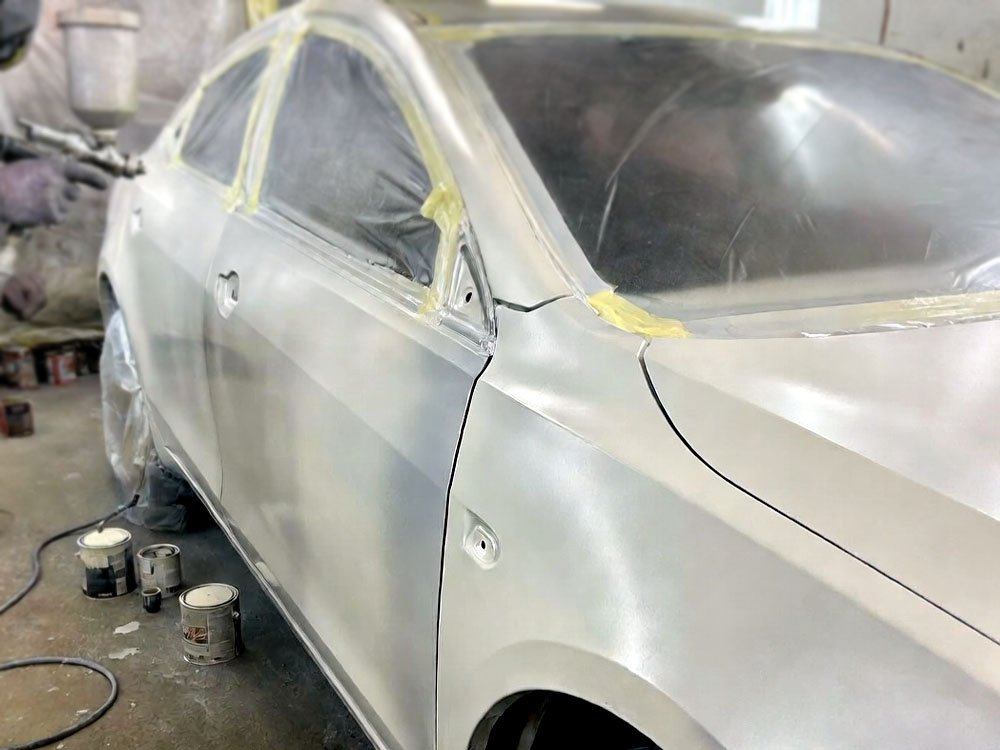
How to Master the Art of Professional Clear Coating
Watch the Paint Change Colors
The paint tells a story as it dries on the metal. It starts out looking very wet and dark. As the minutes pass, you will see the shine start to fade away. This is a good sign because it means the solvents are escaping into the air. I like to watch it from an angle against a bright light to see the change.
Don’t panic when the color looks a bit flat or boring. The clear coat is what brings the depth and the sparkle back to life. You just need to make sure the base is dry enough to stay put. If you spray too early, the colors might bleed together and look muddy. Patience is your best friend when you’re standing in the paint booth.
I usually give it an extra ten minutes just to be safe. It’s better to be a little late than a second too early. If you’re in a cold garage, use a heat lamp to help things along. Just don’t put the lamp too close or you might bake the paint unevenly. Slow and steady wins the race when you want a show quality finish.
- Look for a uniform matte finish across the whole part.
- Use a flashlight to check for any hidden wet spots.
- Wait longer if the paint still smells very strong.
- Check the edges since they usually dry the slowest.
Check the Tacky Tape Trick
I have a little secret I use every single time I paint a car. I always put a small piece of masking tape on a scrap piece of metal next to the car. I spray that scrap piece at the exact same time I spray the car. This gives me a safe place to test the dryness without ruining the actual paint job.
After about twenty minutes, I gently touch the scrap piece with my gloved finger. If the paint pulls up or leaves a big smear, it’s not ready yet. You want it to feel slightly sticky but it shouldn’t come off on your glove. This “tacky” stage is the perfect bridge for the clear coat to grab onto. It creates a chemical bond that lasts for years.
If the paint feels totally dry and hard, you might have waited too long. In that case, the clear coat won’t stick well. You want that middle ground where it’s firm but still has a tiny bit of grip. This is why professionals don’t just guess. We use these little tests to make sure the timing is perfect every time.
- Apply a test spray on a piece of cardboard or metal.
- Touch the test area only with a clean nitrile glove.
- Wait for the “fingerprint” test to show no paint transfer.
- Move to the next step once the surface feels firm.
Manage Your Garage Temperature
The air around you is the biggest factor in how fast paint dries. If your garage is freezing, the paint will just sit there and stay wet forever. If it’s too hot, the top layer dries while the bottom stays wet. I try to keep my shop at a comfortable seventy degrees for the smoothest finish.
Humidity is another silent killer for your paint job. If it’s raining outside, the moisture in the air can get trapped under your clear coat. This makes the finish look foggy or white, which we call “blushing.” I always run a dehumidifier or wait for a dry day before I start spraying. It saves me so much work and frustration in the long run.
If you can’t control the heat, you need to change your thinners. There are “fast” thinners for cold days and “slow” thinners for hot days. Using a slow thinner in the heat gives the paint time to level out. This prevents that bumpy “orange peel” look that everyone hates. Talk to your paint store guy about the weather before you buy your supplies.
- Use a wall thermometer to track the room temperature.
- Avoid spraying if the floor is wet or damp.
- Warm up your paint cans in a bowl of warm water.
- Keep the air moving with a fan but don’t point it at the car.
Clean the Surface One Last Time
Before that clear coat hits the paint, you need to be sure it’s clean. Even if you waited the perfect amount of time, dust can land on the wet base. I use a very light touch with a tack rag to pick up any tiny specs. Don’t press down hard or you will leave a permanent mark in the soft paint.
You should also look for any “fish eyes” which look like small craters. These happen if there is a tiny bit of oil or silicone on the surface. If you see them while the paint is drying, you have to fix it now. Clear coat will only make those spots look much worse and more obvious. A quick wipe with the right cleaner can save your whole project.
Always wear a fresh suit and a mask when you get ready for the clear. Your skin has oils and your hair has dust that can ruin the finish. I even blow myself off with the air hose before I walk near the car. It sounds like a lot of work, but it’s the only way to get a professional result. A clean workspace is the secret to a mirror shine.
- Wipe very gently with a brand new tack cloth.
- Check for lint that might have fallen from your clothes.
- Ensure no oil from the air compressor reached the gun.
- Keep all pets and kids away from the drying area.
Spray the First Coat Lightly
The first layer of clear coat is called a “tack coat.” You don’t want to go for a heavy, wet look right away. Just mist it on so it covers the surface evenly. This thin layer acts like glue for the next heavier coats. It also prevents the paint underneath from reacting badly to the heavy solvents.
I usually let this first light coat sit for about ten minutes. It will look a bit grainy or like sandpaper, and that’s totally fine. You’re building a foundation here. If you try to make it look perfect on the first pass, it will probably run down the door. Runs are a nightmare to sand out later, so just take your time.
After that first layer sets, you can start being a bit more aggressive. The second coat should be “wet” and smooth. Move your arm at a steady speed and keep the gun at the same distance. Watch the light reflection on the panel to see how the clear is laying down. This is where the magic really starts to happen for your car.
- Keep the spray gun about eight inches from the metal.
- Overlap each pass by about fifty percent for even coverage.
- Start the spray before you reach the panel and stop after.
- Listen to the sound of the gun to ensure steady pressure.
Learn the Twenty Four Hour Rule
There is a point where you simply cannot wait any longer. Most paint brands give you a twenty four hour “window” to apply clear coat. After that, the paint becomes too hard and chemically stable. If you spray clear on top of old, hard paint, it won’t stick. It might look okay for a week, but then it will start to flake off.
If life gets in the way and you miss your window, don’t worry too much. You just have to do a little extra work. You’ll need to very lightly sand the base coat with fine sandpaper. This creates tiny scratches that the clear coat can “bite” into. It’s an extra step, but it’s much better than having your paint peel off on the highway.
I always try to finish the base and the clear in the same afternoon. It’s the safest way to ensure they bond together as one solid layer. Set aside a full day where you won’t be interrupted. Turning off your phone can be the best tool in your garage. When you focus on the timing, the results will speak for themselves.
- Mark your start time on a piece of tape on the wall.
- Finish the entire clear coat process in one session.
- Scuff the surface with 1000 grit if you wait too long.
- Avoid leaving the car overnight without the clear coat applied.
What Happens If You Wait Too Long to Clear Coat?
If you wait too long, the paint loses its “open” state. Paint is like a chemical sponge when it’s fresh. It wants to soak up the clear coat so they become one thick layer. Once it sits for a day or two, that sponge closes up and becomes a hard shell. The clear coat then just sits on top like water on a waxed car.
Eventually, the sun and the wind will pull that clear coat away. You will see big bubbles or white patches where the layers have separated. This is why people see clear coat peeling off older cars. It usually means the factory or the shop didn’t follow the timing rules. You have to respect the chemistry to make the beauty last.
If you do miss the window, you must “scuff and shoot.” This means you use a grey scuff pad or very fine sandpaper to dull the shine. You aren’t trying to remove the paint, just to give it some texture. Wipe it down with a wax and grease remover after you sand. Then you can safely spray your clear coat and it will stay put for a long time.
- The clear coat might peel off in large sheets later.
- You lose the chemical bond that keeps the paint strong.
- The finish might look dull because it didn’t melt together.
- Adhesion failure is the most common cause of bad paint jobs.
- Sanding is the only way to fix a surface that sat too long.
- Always check the tech sheet if you’re unsure about the time.
Final Thoughts
You really can do this yourself if you just stay patient. Painting a car is mostly about waiting for the right moment to act. Now that you know how long should you wait to clear coat after painting, you’re ahead of most people. Just keep your workspace clean and watch those flash times. Grab your spray gun and give it a try. You are going to love that new shine.
| Condition | Wait Time (Minutes) | Action to Take |
| Hot and Dry | 15 – 20 | Check for matte look quickly |
| Perfect Room Temp | 30 – 40 | Most common time to spray |
| Cold or Humid | 60 – 90 | Use a heater if possible |
| Over 24 Hours | No wait | Stop and sand the surface |
| Between Clear Coats | 10 – 15 | Let the tack coat set up |
Frequently Asked Questions (FAQs)
Is it okay to clear coat the next day?
You can usually clear coat the next day if it has been less than twenty four hours. Most automotive paints have a specific window where they stay chemically active. If you stay within this timeframe, the clear coat will stick perfectly. Always check the temperature in your garage because cold air can slow down the drying process quite a bit.
Can I spray clear coat over dry paint?
You can spray clear coat over dry paint, but you have to be careful about how dry it is. If the paint is just “touch dry” from an hour ago, you are in the perfect spot. However, if the paint has been dry for days, you must sand it first. Clear coat needs a rough surface or a chemical bond to stay attached to the car.
Do I need to sand between base coat and clear coat?
You should not sand your base coat before applying clear coat unless you have a mistake to fix. Sanding the base coat can change the way metallic colors look and create weird streaks. If you have dust nibs, sand them out very lightly and then spray one more thin layer of color. This keeps the color even before the clear goes on.
Is it better to wait longer for the paint to dry?
Waiting a little longer is usually safer than spraying too soon. If you spray clear coat over wet paint, the solvents get trapped and cause bubbles. However, you don’t want to wait so long that the paint hardens completely. Aim for that “sweet spot” where the paint looks dull and isn’t wet to the touch but hasn’t sat for a full day.
Can humidity affect my waiting time?
Humidity plays a huge role in how long you should wait. High moisture in the air keeps the solvents from leaving the paint quickly. If it is a very humid day, you might need to double your waiting time. I always suggest using a hygrometer to check the air. If it’s over sixty percent, you might want to wait for a drier day.
Do I have to use the same brand for both?
It is always a smart idea to use the same brand for your paint and your clear coat. Companies design these products to work together perfectly. If you mix brands, the chemicals might fight each other and cause the paint to wrinkle or lift. Stick with one system to make sure your hard work doesn’t go to waste because of a chemical reaction.
Is one coat of clear enough for a car?
One coat of clear is almost never enough to protect the paint and give a deep shine. I always recommend at least two or three coats. The first coat is thin to help it stick, and the next coats are for the gloss. Having more clear coat also gives you extra room to sand and polish the car later without hitting the color.
Can I use a hair dryer to speed up the process?
A hair dryer can help in a very small spot, but it is risky for a whole car. The air from a dryer is very focused and can get too hot, which might cause the paint to blister. It’s much better to warm up the entire room with a space heater. This ensures the whole panel dries at the same speed so the finish stays uniform.