

Any person who thinks a car runs only on gas hasn’t felt the panic of a dead charging system at night. Your engine needs big sparks to keep the pistons moving and the lights glowing. I once drove a truck five miles using only the battery and felt every single volt drain away. You need to know how long does a car battery last without an alternator before you get stuck.
Charge your battery fully using a wall outlet before you try to drive anywhere. Turn off every single light and the radio to save every bit of power for the spark plugs. Keep your speed steady and avoid using the brakes too much because brake lights pull a lot of juice. Drive straight to a repair shop or your home garage without making any stops. Watch the dashboard for dimming lights and pull over the second the engine starts to stumble or cough.
How Many Minutes Can You Drive Before Your Engine Dies?
Your car usually stays running for about 30 to 60 minutes if the battery is healthy and full. This time changes a lot based on how many things you have turned on while you drive. A small car with no power seats or fancy screens will last much longer than a luxury SUV. I have seen some old cars go for two hours because they have very simple electrical parts.
Modern cars are much more demanding because they have computers that need constant power to manage the fuel. If you are driving at night with the headlights on, you might only get 20 minutes of travel. The heat or the air conditioner will also eat up the energy very fast. It is a race against time where the battery is your only fuel tank for the electronics.
The age of your battery plays a huge role in this survival game too. A brand new battery holds a deep charge and gives you a better safety net. An old battery that is three years old might give up in just ten minutes of driving. You should always assume you have less time than you think to avoid a tow truck bill.
- Check the age of your battery on the top sticker.
- Newer batteries give you roughly 45 minutes of daytime driving.
- Headlights cut your driving time by more than half.
- Rainy days are dangerous because wipers use a lot of power.
- Computers in new cars shut down if voltage drops too low.
- Stop and go traffic drains the battery faster than highway speeds.
How to Save Power and Reach Your Destination Safely
Turn off Every Single Accessory Right Now
You need to act like a power miser the moment that red battery light pops up. The radio is the first thing to go because you don’t need music while you are in a crisis. Next, unplug your phone chargers and turn off the screen on your dashboard if you can. These small things seem tiny, but they add up and steal minutes from your trip.
I always tell people to keep the windows up to stay aerodynamic and keep the fans off. Even the blower motor for your heater uses a surprising amount of electricity to spin. If it is cold, wear a coat instead of turning on the seat heaters or the defrost. Every bit of saved energy goes straight to the ignition system to keep the fire in your engine.
If you have daytime running lights, see if you can disable them for the drive. Some cars let you turn off the interior dome lights too. You want your car to be a ghost on the road with zero extra draws. This focus on saving power can be the difference between making it home or sitting on a dark shoulder.
- Kill the radio and the infotainment screen immediately.
- Unplug all USB cords and cigarette lighter adapters.
- Keep the climate control system completely powered down.
- Avoid using the horn unless it is an emergency.
Drive Smoothly and Avoid the Brake Pedal
The brake lights on your car are actually very bright and pull a lot of current from the battery. Every time you step on that pedal, you are spending energy that you won’t get back. Try to coast as much as you can and look far ahead to see traffic changes. This helps you slow down naturally without using the lights and wasting your precious volts.
I suggest staying in the right lane and keeping a steady speed that isn’t too fast or too slow. High speeds create a lot of wind resistance, but very low speeds mean you spend more time on the road. You want to find a middle ground where you get home quickly without stressing the engine. A steady pace keeps the ignition system firing at a predictable and efficient rate.
Avoid using your turn signals unless you really have to for safety. It sounds crazy, but those blinking bulbs take power every time they flash. If you can take a route with fewer stoplights, do it even if it is a bit longer. Stopping and starting is the enemy of a dying battery because the engine works harder at low RPMs.
- Coast to a stop instead of slamming on the brakes.
- Choose a route with the fewest traffic lights possible.
- Maintain a steady speed around 35 to 45 miles per hour.
- Use hand signals for turns if it is safe and legal.
Watch the Dashboard for These Warning Signs
Your car will start talking to you through the dashboard when the battery gets low. The first sign is usually the battery icon, but then your gauges might start acting weird. I have seen needles jump around or go flat even while the car is still moving. This happens because the sensors aren’t getting enough steady voltage to report the right data.
You might notice the dashboard lights getting dimmer and harder to see. If you are driving at night, your headlights will turn a yellow color instead of bright white. This is a massive warning that the voltage has dropped below twelve volts. When the lights get dim, you probably have less than five minutes of engine life left.
The transmission might also start to shift roughly or stay in one gear. Modern gearboxes use electric solenoids to move parts inside the transmission. If they don’t get power, the car won’t know how to change gears properly. If the car feels jerky or sluggish, pull over to a safe spot while you still can move.
- Look for needles on the dash that drop to zero.
- Watch for a flickering or dimming instrument cluster.
- Pay attention to any weird smells like burning plastic.
- Listen for the engine missing a beat or stumbling.
Understand the Role of Your Ignition System
The ignition system is the heart of why your car keeps running without the alternator. It takes the 12 volts from the battery and turns it into thousands of volts for the spark plugs. This process happens thousands of times every minute while you are driving down the road. It is a constant drain that never stops as long as the engine is turning.
Older cars with carburetors can actually run longer because they don’t have electric fuel pumps. Most cars today have a pump inside the gas tank that needs a lot of juice to push fuel to the engine. If the battery dies, the pump stops, and the engine starves for gas instantly. You are feeding two hungry systems with one limited supply of energy.
I like to think of the battery as a bucket of water with a hole in the bottom. The ignition system is that hole, and it is draining the bucket every second. You can’t plug the hole, so you just have to move as fast as you can. Understanding this helps you respect why you can’t waste power on the heated steering wheel.
- Fuel pumps need a steady flow of high voltage to work.
- Spark plugs fire more often at higher engine speeds.
- Electric fuel injectors require power to open and close.
- Computers calculate the air and fuel mix every millisecond.
Use a Jump Starter or Portable Power Pack
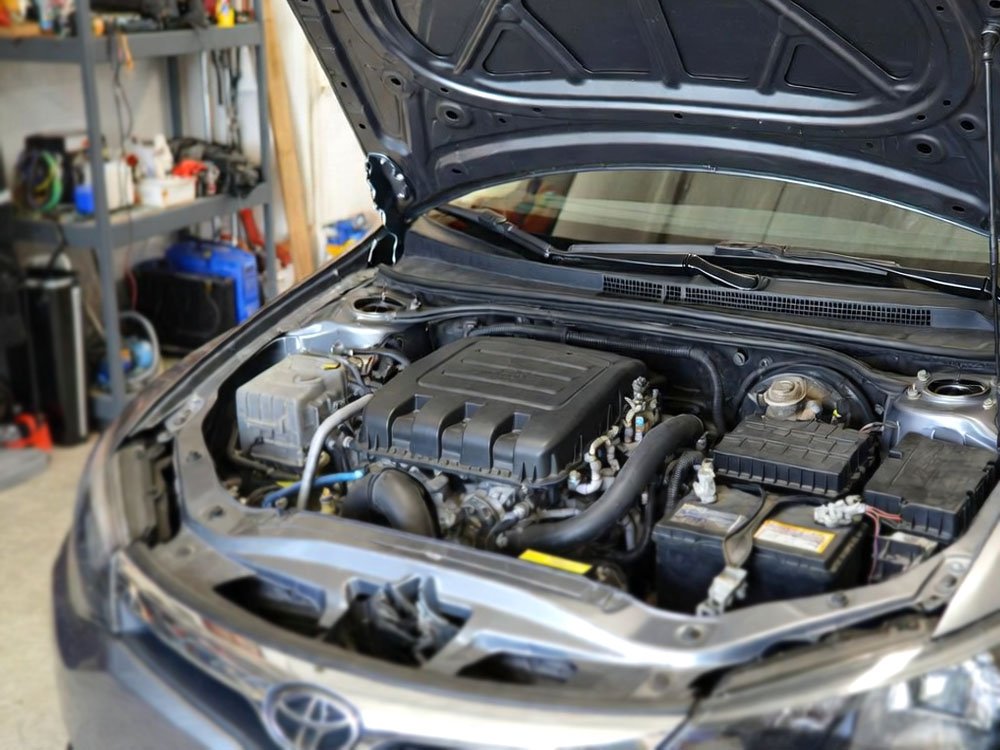
If you get stuck, a portable jump starter can be a real lifesaver for your trip. You can actually clip a power pack to the battery and let it help provide extra juice. While it isn’t a permanent fix, it adds more capacity to your “bucket” of power. I have used this trick to get an extra few miles when the alternator died unexpectedly.
Make sure the portable pack is secured so it doesn’t fall into the moving engine parts or the fan. You should only do this if you are desperate and have a very short distance to go. It is better to use the pack to start the car and then keep it connected for the ride. This gives the fuel pump a little more energy to keep the pressure up.
Just remember that these packs are small and will also drain very quickly under a heavy load. They are mostly meant for starting a car, not for running it for an hour. But in a pinch, that extra ten minutes of power can get you off a dangerous highway. Always keep one charged in your trunk for these exact types of bad days.
- Secure the jump pack with a bungee cord under the hood.
- Ensure the cables are far away from the spinning belts.
- Check that the jump pack has a full charge before using.
- Don’t expect a small pack to last more than a few miles.
Clean Your Battery Terminals for Better Flow
Dirty battery terminals can make a bad situation even worse by resisting the flow of power. If there is white crusty stuff on the metal, your car has to work harder to get energy. I always tell my friends to keep a small wire brush in the glove box for this reason. Cleaning the metal helps the battery give up every last drop of power to the engine.
If you are stranded, you can sometimes scrape the terminals with a key or a screwdriver to get better contact. This ensures that the limited voltage you have isn’t being wasted as heat at the connection point. You want the path from the battery to the car to be as clean and easy as possible. It is a simple trick that helps you squeeze out every bit of life.
Pouring a little bit of soda or water on the terminals can also help clear away the acid buildup. Just be careful not to get everything too wet or cause a short circuit. A clean connection is like a wide pipe that lets the power flow without any struggle. This small maintenance step can actually buy you an extra mile or two of driving time.
- Scrape off any blue or white corrosion from the metal posts.
- Tighten the bolts on the cables so they don’t wiggle at all.
- Check for frayed wires that might be leaking electricity.
- Apply a tiny bit of grease to stop the corrosion from returning.
Can a Battery Be Saved After Running Flat?
You can usually save a battery if you charge it back up right away after it dies. Batteries do not like to sit empty because it causes permanent damage inside the lead plates. If you leave it flat for a week, you will likely need to buy a brand new one. I always put mine on a slow charger for 24 hours to bring it back to life.
A slow charge is much better for a dead battery than a fast jump from another car. Fast charging creates heat and can warp the internal parts of the battery. If your alternator failed, your battery is likely very tired and stressed from the long drive. Treat it gently with a low-amp charger to see if it will still hold a healthy state.
However, if the battery is more than four years old, the stress of running flat might be the end. You might find that it never holds a charge the same way again after this happens. It is always worth a try to save it, but be ready to visit the parts store. A battery tester can tell you for sure if the cells are still good or if they are toasted.
- Charge the battery as soon as you get the car home safely.
- Use a smart charger that can repair deeply discharged cells.
- Check the water levels if you have a battery with removable caps.
- Test the battery at a local shop to see its health.
- Avoid leaving a dead battery in freezing cold temperatures.
- Expect a shorter lifespan after the battery has been fully drained.
Final Thoughts
Driving with a bad charging system is scary, but you can manage it if you are smart. You now know how long does a car battery last without an alternator and how to stretch those minutes. Turn off the extras, drive smooth, and get to a safe spot as fast as you can. You’ve got this, so stay calm and keep your eyes on the road.
| Part Name | Power Usage | Priority Level |
| Ignition System | High | Critical |
| Fuel Pump | High | Critical |
| Headlights | Very High | Low (unless dark) |
| Radio/Music | Low | None |
| Air Conditioning | Very High | None |
| Windshield Wipers | Medium | Medium |
| Brake Lights | Medium | High |
Frequently Asked Questions (FAQs)
Is it safe to drive my car if the battery light is on?
It is not very safe because your car could stop moving at any moment without warning. You lose power steering and power brakes when the engine dies, which makes the car hard to turn. You should only drive to the nearest safe parking lot or a repair shop immediately.
Can I jump start a car with a bad alternator?
Yes, you can jump start the car to get the engine running, but it won’t stay running for long. The engine will pull all its power from the battery since the alternator isn’t helping. It will die again as soon as the battery runs out of stored energy.
Do I need to replace my battery after the alternator dies?
You might not need a new battery if it is still fairly new and you charge it quickly. However, a total drain is very hard on a battery and can wear it out fast. It is best to have it tested once your new alternator is installed.
Is it possible to fix an alternator on the side of the road?
It is very hard to fix an alternator yourself without the right tools and a new part. Most people just replace the whole unit because the internal brushes or diodes are what failed. It is usually better to tow the car to a garage for this specific repair.
Can a bad battery cause my alternator to fail?
Yes, a very old or shorted battery can make the alternator work too hard and burn out. The alternator tries to charge a battery that won’t take a charge, which creates too much heat. Replacing a bad battery early can actually save your expensive alternator from breaking.
Do I have to turn off my lights during the day?
You should definitely turn off your lights during the day to save every bit of battery power. Daytime running lights can be a big drain when your alternator is not working. Only use your lights if it is dark or if it is raining for safety.
Is there a way to tell how much time I have left?
There is no perfect timer, but usually, you have about 30 minutes of life in a healthy battery. If your car starts to lose power or the dash goes dark, you have seconds left. Always plan for the shortest time possible so you don’t get stranded.
Can I use a portable charger while I am driving?
You can keep a portable jump pack connected to the battery to give it a little more life. Make sure the cables are tight and won’t get caught in the engine belts or the fan. This can give you just enough extra power to reach your driveway.